
Memory Game
A gentle three-level memory game to steady a racing mind and sharpen your focus.
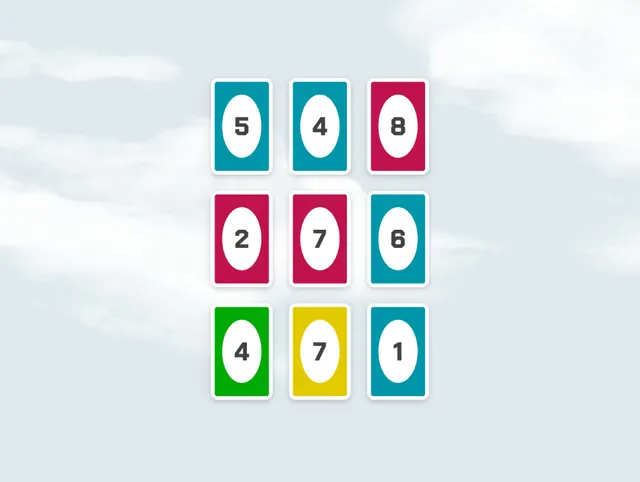
Memory Game
A gentle three-level memory game to steady a racing mind and sharpen your focus.
Type: game
Try 3 exercises for free right now.
Supporting a team?
Zen+ Health helps employers reduce avoidable absence and support wellbeing, privately, with anonymised insight only.
Zen+ Health for Business →What Are These Games?
These are short, low-pressure games designed to give your mind a gentle reset while lightly engaging attention and working memory.
- Duck Sort Game: Sort ducks into colours. Simple visual categorising supports focus without strain.
- Memory Game: A three-level card matching game. It exercises short-term memory and attention in a calm, time-limited way.
- Bubbles Game: Pop all the bubbles in three rounds, like a digital bubble wrap toy. Provides satisfying tactile-style feedback and grounding through repetitive action.
All are intended as micro-interventions for stress relief and mental refresh, not as high-stakes challenges. They can be used as quick stand-alone breaks or as part of a regular wellbeing routine at work.
There is a fourth game, Can Crusher, which works differently enough - a tactile, physical-feeling task for restlessness and pent-up energy rather than a light attention puzzle - that it has its own page.
How They Work
Cognitive mini-games help through several complementary mechanisms:
Attentional shift and recovery: Switching to a simple, absorbing task moves attention away from stressors. This brief cognitive detachment reduces rumination and supports return-to-task performance.
Light engagement, not overload: The games use soft challenge that is achievable in minutes. This can elicit a mild flow state, which is associated with improved mood and reduced perceived stress.
Positive affect and arousal regulation: Casual gameplay is linked to improved mood and reduced physiological arousal in the short term, which supports stress regulation.
Working memory and attention tune-up: Matching tasks and rapid sorting lightly exercise working memory, selective attention and processing speed, which can translate into a crisper mental state after the break. Evidence for far transfer is mixed, so we frame this as a temporary tune-up rather than long-term cognitive enhancement.
Visuospatial load as distraction: Focusing on simple visuospatial tasks can temporarily compete with intrusive thoughts, supporting short-term relief from anxiety.
Scientific Benefits
Stress and Anxiety Reduction
Systematic reviews indicate that casual video games can reduce stress and anxiety in the short term and improve mood compared with controls, with benefits reported even from single, short sessions of play. In a controlled comparison, a 20-minute session of a calm casual game reduced undergraduates’ psychological and physiological stress (self-reported stress, heart rate and blood pressure) about as much as a mindfulness body scan did on the physiological measures, though the body scan won on perceived stress.
Mood and Motivation
Short play sessions reliably increase positive affect. Large-scale studies using telemetry suggest a small but positive association between time spent playing and wellbeing, particularly when play is voluntary and enjoyable.
Attention and Working Memory
Meta-analyses find that certain game experiences can improve perceptual and attentional skills and processing speed. Evidence for broad, long-term transfer to unrelated abilities is mixed, so expectations should remain realistic. As a break, the cognitive “warm-up” can still be useful.
Recovery from Cognitive Load
Media psychology research shows that brief, enjoyable activities that are low effort and high enjoyment help people recover from work strain and support subsequent task performance. Sorting and matching games fit this profile.
How to Use the Games
Duck Sort Game (colour sorting)
- Set a short intention: For example, “two calm minutes to reset”.
- Begin on an easy level. Aim for smooth, steady sorting rather than speed.
- Use single-focus attention: Notice colour, place gently, and let distracting thoughts pass.
- Stop after 1-3 minutes or when you feel a sense of reset.
- Transition back by naming the first work step you will take.
Tips:
- Keep your posture neutral, shoulders relaxed.
- If you notice tension building, slow down. The goal is calm focus, not a high score.
- If colour perception is challenging, reduce screen brightness or use the memory game instead.
Memory Game (three progressive levels)
- Set a calm time-box: 2-4 minutes, or one level only.
- Start at level 1 to warm up attention and working memory.
- Turn two cards at a time: Say the pair softly in your head to aid recall.
- Breathe naturally and keep the pace unhurried.
- Pause after a level and notice how focused you feel. Stop when you sense clarity has returned.
Tips:
- If you feel strain, take a 20-30 second visual break before continuing.
- For a mindful twist, notice three things about each card (colour, shape, location) without judging performance.
Bubbles Game (bubble wrap style)
- Set a grounding intention: “Three rounds to reset”.
- Pop all the bubbles on each grid - tap or click each one.
- Enjoy the satisfying feedback: Like popping bubble wrap, the tactile-style response is calming.
- Complete all three rounds or stop when you feel grounded.
- Notice the shift: The repetitive action helps settle racing thoughts.
Tips:
- Focus on the simple satisfaction of clearing each grid.
- Use this when you need a quick sensory grounding break.
- The predictable, completion-focused format gives a sense of control and accomplishment.
When to Use These Games
- Between meetings to reset attention
- After intense focus to reduce cognitive carryover
- When you feel stuck or frustrated and need a brief shift
- Before tasks that need accuracy and steady attention
- As part of a short pre-performance routine to settle nerves
Research & Evidence
Casual games reduce stress and anxiety:
Pallavicini, F., Pepe, A., & Mantovani, F. (2021). Commercial Off‑The‑Shelf Video Games for Reducing Stress and Anxiety: Systematic Review. JMIR Mental Health, 8(8), e28150. https://doi.org/10.2196⁄28150Short play improves mood and lowers stress in students:
Desai, V., Gupta, A., Andersen, L., Ronnestrand, B., & Wong, M. (2021). Stress‑reducing effects of playing a casual video game among undergraduate students. Trends in Psychology, 29(3), 563-579. https://doi.org/10.1007/s43076-021-00062-6Gaming and wellbeing association (large‑scale telemetry):
Johannes, N., Vuorre, M., & Przybylski, A. K. (2021). Video game play is positively correlated with well‑being. Royal Society Open Science, 8(2), 202049. https://doi.org/10.1098/rsos.202049Attention and perceptual skills in gamers (meta‑analysis):
Bediou, B., Adams, D. M., Mayer, R. E., Tipton, E., Green, C. S., & Bavelier, D. (2018). Meta‑analysis of action video game impact on perceptual, attentional, and cognitive skills. Neuroscience & Biobehavioral Reviews, 84, 220-233. https://doi.org/10.1016/j.neubiorev.2018.01.002Limits of far transfer from working memory training:
Sala, G., Aksayli, N. D., Tatlidil, K. S., Gondo, Y., & Gobet, F. (2019). Working memory training does not enhance older adults’ cognitive skills: A comprehensive meta-analysis. Intelligence, 77, 101386. https://doi.org/10.1016/j.intell.2019.101386
Interpretation: The evidence supports short-term stress relief and mood benefits from casual gameplay, with attentional tune-ups that help you feel clearer post-break. Claims of large, general cognitive enhancement are not supported consistently, so we use games as brief recovery tools, not as cognitive therapy.
Additional Resources
American Psychological Association - Managing stress
https://www.apa.org/topics/stressNIH/NCCIH - Relaxation techniques for health
https://www.nccih.nih.gov/health/relaxation-techniques-what-you-need-to-know
Safety & Precautions
- Keep sessions short. Aim for 1-4 minutes. Stop if you feel strain or agitation.
- Avoid flashing or intense visual effects if you have a history of photosensitive conditions.
- Ergonomics matter: Maintain neutral posture and rest your eyes briefly after each session.
- Not a replacement for care: Games can complement but do not replace treatment for anxiety, depression or cognitive disorders.
- Use judgement at work: Do not play during activities that require vigilance. Use between tasks.
Summary
Cognitive mini-games such as colour sorting, memory matching and bubble popping (bubble wrap style) are practical, enjoyable tools for quick stress relief and attention reset. The research supports short-term improvements in mood and perceived stress and shows light benefits for attention after brief play. Keep expectations realistic, use games as brief recovery tools, and you will likely return to work feeling calmer and more focused.
This information is for educational purposes and is not a substitute for professional medical advice. Always consult a healthcare provider for personalised guidance.
Explore more
- All mindfulness & breathing exercises: the full research-backed library.
- ZenScore: your private daily wellbeing signal.
- Timeline: proactive micro-resets scheduled around your day.
- Download the app for iOS & Android.

